La Semilla Ministries, Carazo, Nicaragua
It’s always a joy to share in depth how we define Agriculture Development in Nicaragua.
In 2007 La Semilla Ministries was born in the minds of Wally and Esther Wiebe while they were working in construction at a local orphanage. The Wiebe’s had a burden for the poverty stricken families they saw and interacted with in rural Nicaragua. An initiative in economic development seemed appropriate, and since it was rural Nicaragua, the focus quickly became agriculture. In 2009 property was purchased for construction of office space, warehouse, workshop, and also land for research & demonstration. Rob and Leslee Oudman joined the ministry in 2010 to add their agriculture perspective, as they began to exit from their potato growing farm operation in Alberta, Canada.
The first years were full of investigations and establishing networks of contacts as the ministry slowly took shape. Community development projects such as school building improvements, community center construction and water well development helped to solidify relationships in rural communities and gain the trust needed to deepen our involvement in economic development.
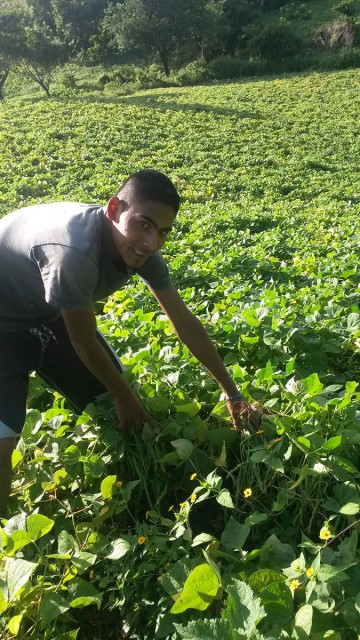
2013 was the first year we began our “Sustainable Ag Program”. This program builds on essential skills and resources which already exist in rural communities but are under-utilized. Essentially it is a cooperative model bean production system ending with increased yield, market returns, and profitability for participating producers. La Semilla staff have collected agronomic information from government sources, ag-supply companies, and experience on their land holdings to put together a best practices production system (appropriate seed varieties, plant population, weed control, crop nutrition, disease control) that is achieving improved yields. Additionally, La Semilla Ministries operates a seed cleaning plant to be able to purchase harvested production from growers, clean and process it, and position it for market. Finally, staff are providing access to appropriate technologies in planting, spraying, and harvesting to help farmers see beyond traditional limitations of manual labour toward the possibilities of increased production and financial gain for their families.
Here are some of the initiatives that are built into the work that we do:
- Education & Skills training initiatives Three of our full-time employees are professional agronomists. They have helped define the goals and structure of the Sustainable Ag Program and are responsible for “extension work” – taking it out to the fields. Some of our skills training is in a seminar-type setting, but the majority of it is in the field as our agronomists scout fields with producers, and meet and talk with them in the shade of a tree. All producers are required to complete a prerequisite course which addresses basic finances and biblically founded values and ethics. As we grow the mechanization side of our ministry, certain producers are exposed to skills such as welding and mechanics.
- Access to credit Micro-financing is used as a tool to help producers realize the production potential of the land that they steward. One of the main obstacles to economic growth here is the lack of financial resources. The reason these rural folks don’t progress forward from their subsistent living is a lack of access to credit. Rolled into our cooperative structure is the access to credit for each producer who has passed our prerequisite training. Producers receive a loan (on average $160/acre) for the products we promote that help achieve higher yields and returns. Payment is a few months later as we receive the production from their farms.
- Appropriate Technologies To a small degree, producers in the area are exposed to mechanical methods of crop production. An obstacle to growth is the ability to see the full potential of agriculture as means of financial return for the family. Also, some of the mechanization options help to relieve the repetitive, back-breaking labour of the agriculture cycle. Here in Carazo, the vast majority of the work (prepping the fields, planting, thrashing) are done by hand. La Semilla Ministries demonstrates mechanical cultivation, seeding and thrashing in the various communities of Carazo province.
- Health & Medical initiatives Water well development in the community of Los Mojicas provided that community with a sealed well (no more cattle milling around!) with an elevated tank, diesel generator to run the pump, and submerged lift pump. We’re happy to report that clean, potable water is now readily available! The community of La Chona (home the operations base of La Semilla) will soon open their first local medical clinic through our efforts in construction of a small , but hopefully effective facility. This clinic will meet the health needs of a rural population of around 4000 persons.
- Economic Development As previously stated, this is manifested mainly in the Sustainable Ag Program. Through this program our goal is to see a revitalized Carazo province! Through improved yields and diversification of crops, we help producers achieve a level of income that, given time, will prayerfully result in stable family incomes, less migration of seasonal labor away from their rural homes, and provide hope for a coming generation that – Yes, there is a future in agriculture! The cooperative marketing structure is adding value to raw product that is then adding to the income of participating producers. Employment opportunities exist within various points of this cooperative marketing system.
La Semilla Ministries exists in Nicaragua as a project of the Evangelical Free Church of Canada. The Evangelical Free Church of Canada is officially registered with the Nicaraguan Government and is authorized to provide assistance to the Nicaraguan public. Official backing of La Semilla Ministries is through the same organization in Canada, duly recognized by the Canada Revenue Agency and able to offer charitable receipts for donations received.
